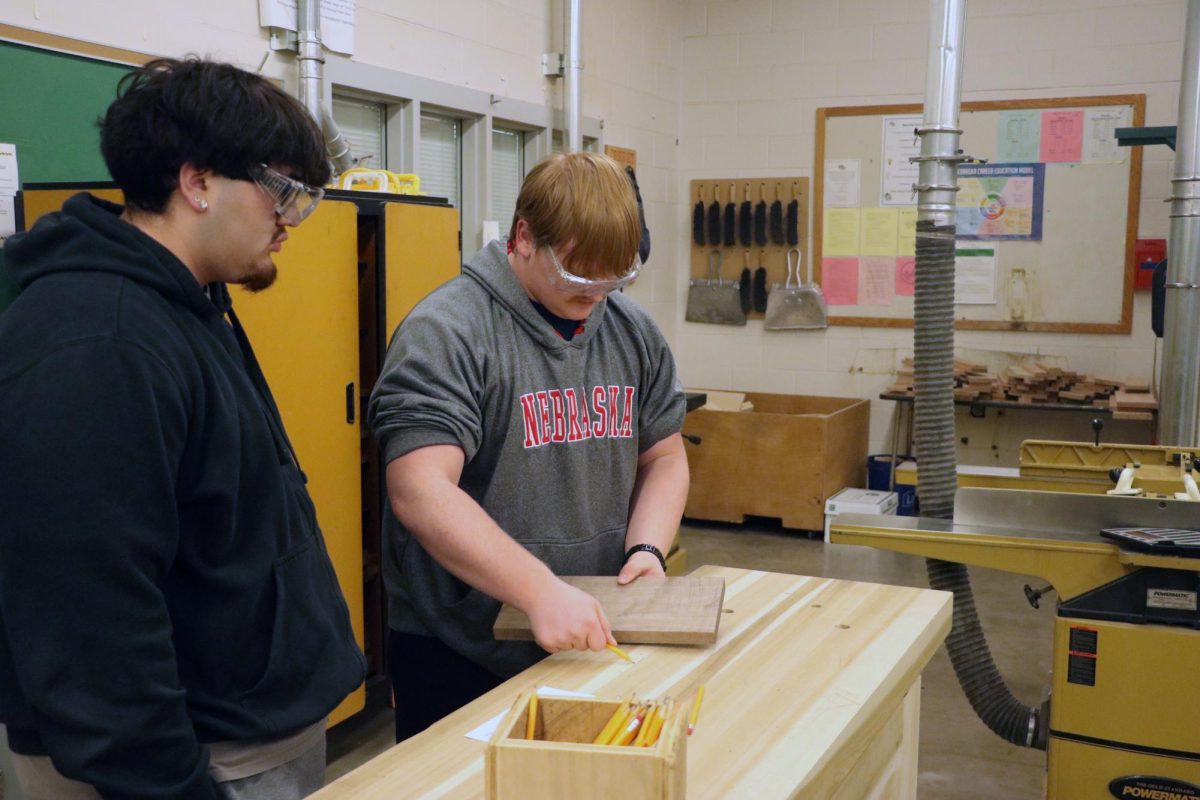
While the class of 2026 took coffee breaks on Tuesdays in February, the rest of the student body and faculty met for Advisement to kick off registration for 2026-2027.
Starting Jan. 27, students and faculty advisors met every Tuesday for 30 min to review credit checks, graduation requirements and discuss post-secondary options.
“Advisement has helped me make sure I am on track and do the right thing,” freshman Molly Addison said. “It has especially helped me pick the right classes.”
While tracking credits and requirements may seem complicated, the process is simpler than many students realize. One of the easiest ways for students to track their progress toward graduation is through StudentVue. The platform provides students with easy, quick access to all their course information.
- Click Course History
- Highlighted classes in green are completed
- Highlighted classes in orange are in progress
- Gray classes need to be completed
These tools help students complete course requests ahead of the March 3 deadline.
“We have been doing this for four years now,” math teacher Cathy Schneiders said. “Each year, students get better at navigating everything.”
After eliminating Quality Time in the spring of 2022 and introducing Advisement for 2022-2023, teachers were no longer tasked with registering freshmen, sophomores and juniors, but instead they could focus on one grade level.
“Figuring out my schedule with other people in my grade level has been very helpful. They have given me ideas on classes that I should take and have helped guide me to make important decisions about graduation.” Student Madelyn Hamiliton said.
According to the counseling department, it is important students choose classes that align with their academic path. The problem arises when students have not considered their post-high school options.
“When a student is uncertain about their academic path, speaking with their counselor is a great next step,” Counselor Kristen Westbrook said. “We are always here to help and support students.”
Students are encouraged to email their counselors to discuss the problems at hand. Counselors have additional information on options beyond simply attending a two- or four-year college.
“Students are often unaware of anything other than attending college,” teacher Amy Opitz said. “There are paid internships, trade schools, and various certifications where students can start earning money right out of high school, while they figure out what career they want to pursue. Kids have so many more options than they did 20 or 30 years ago.”
Registration concerns extend beyond current high school students to the class of 2030. Incoming freshmen must also prepare for new expectations and changes as they transition to high school.
One recent change allows freshmen to fulfill an English elective credit earlier.
“If a student is interested in Intro to Journalism, they could take it as a freshman or a sophomore, and then that would fulfill their English elective.” Assistant Principal Casey Lundgren said.
This update was shared at the incoming ninth-grade night on Monday, Jan.19.
While few major changes have been introduced, preparation remains key.
“Eighth-grade teachers are really aware of the rigor of high school,” Amanda Taylor, Russell Middle School, said.
From middle school teachers preparing the class of 2030 for high school to the high school teachers preparing the class of 2026 for life beyond Millard West, preparation and organization are vital for success, no matter what path students follow.