Are students being protected from certain content or taken away from their freedom to read?
This has been a widely debated topic for schools in the US for years, book bans can be issued by different authorities for the reason that they provide.
Government and religious authorities are often the ones that issue a variety of banned books. The government bans books if they seem threatening to the welfare of the state. Religious institutions also ban books because they target books that do not align with their beliefs or religion.
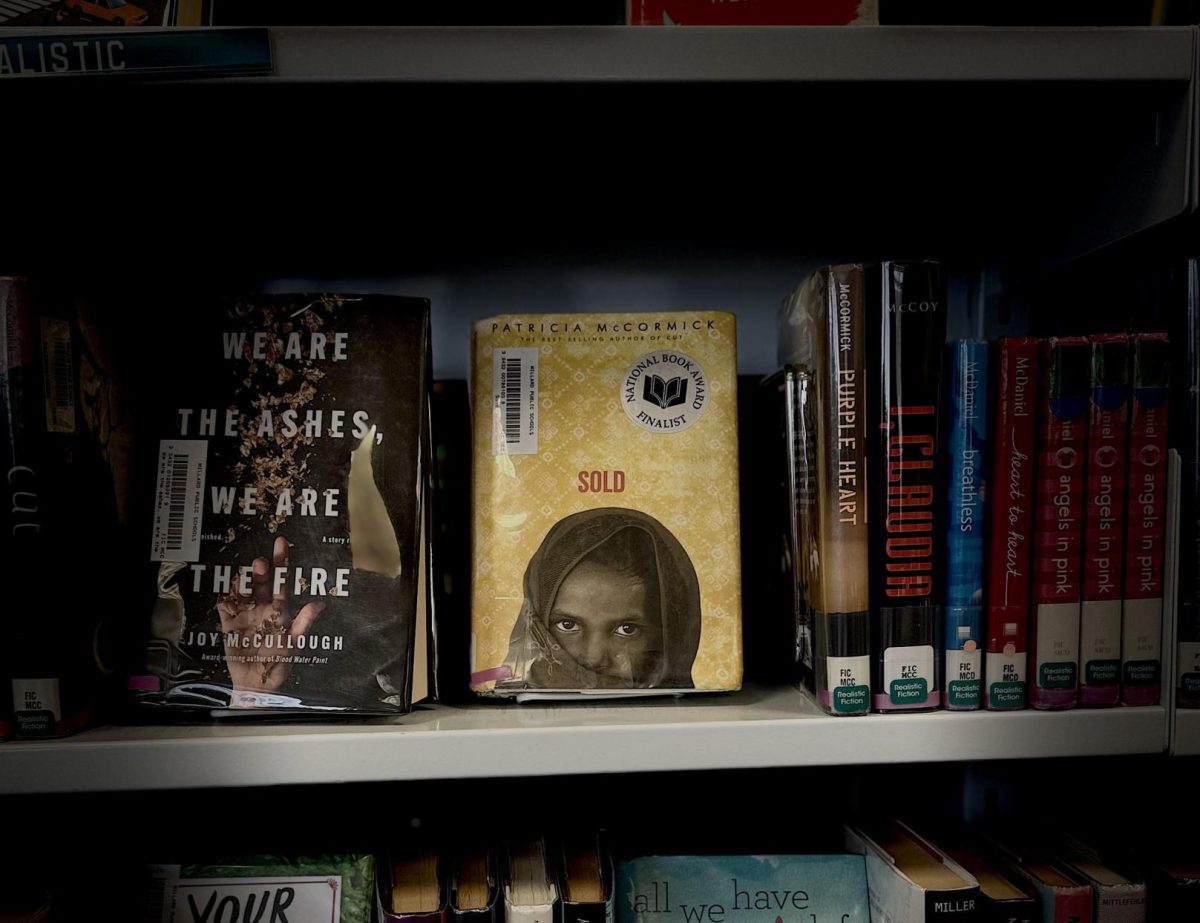
PEN America recorded 6,870 instances of book bans during the 2024-2025 school year in 87 public school districts across 23 states. Since July 2021, 22,810 cases of book bans have been recorded across 45 states and 451 public school districts.
A majority of book censorship in modern America involves books that are deemed inappropriate, a concern for parents and school officials looking to protect children from exposure to sensitive material. However, book censorship also includes books that support different lifestyles, as well as what they call ‘woke’ perspectives.
No single individual or group should have the authority to decide whether or not a book is politically incorrect to everyone. Banning books infringe on students’ First Amendment rights taking away their freedom to access diverse ideas and perspectives.
“Politically incorrect to one person is not politically incorrect to another person,” librarian Rainbow Dark said. “Just because one segment of society doesn’t agree with something does not mean all of society should not have access to those ideas.”
Additionally, The Guardian News & Media reports in 2025 a man went to a public library in Ohio and checked out books on Jewish, Black and LGBTQ+ history, and burned them all, just because he did not want to read the books, and wanted to prevent others from reading them too.
It is the right of everyone to understand and have knowledge of different ideas. How they think about these ideas is up to them. Books cover both things people always want their children to know and sensitive topics that might be necessary for them to read.
In the American public school system, individual books can be challenged by parents who consider these books inappropriate. A book being questioned does not justify banning it for all children.
The goal of libraries is to educate, providing all kinds of ideas to help people make decisions and draw their own conclusions about anything and everything.
“A library should reflect our community,” librarian Cherie Nowak said. “And our community is very different. So we should all have access to all different kinds of books with different thoughts.”
Education standards matter, but they should not cost the students’ right to think, choose and express themselves.